Sword Parts in Sword & Shield Simulator
The four designer slots, the molds behind them, and why a fancy pommel is not a build.
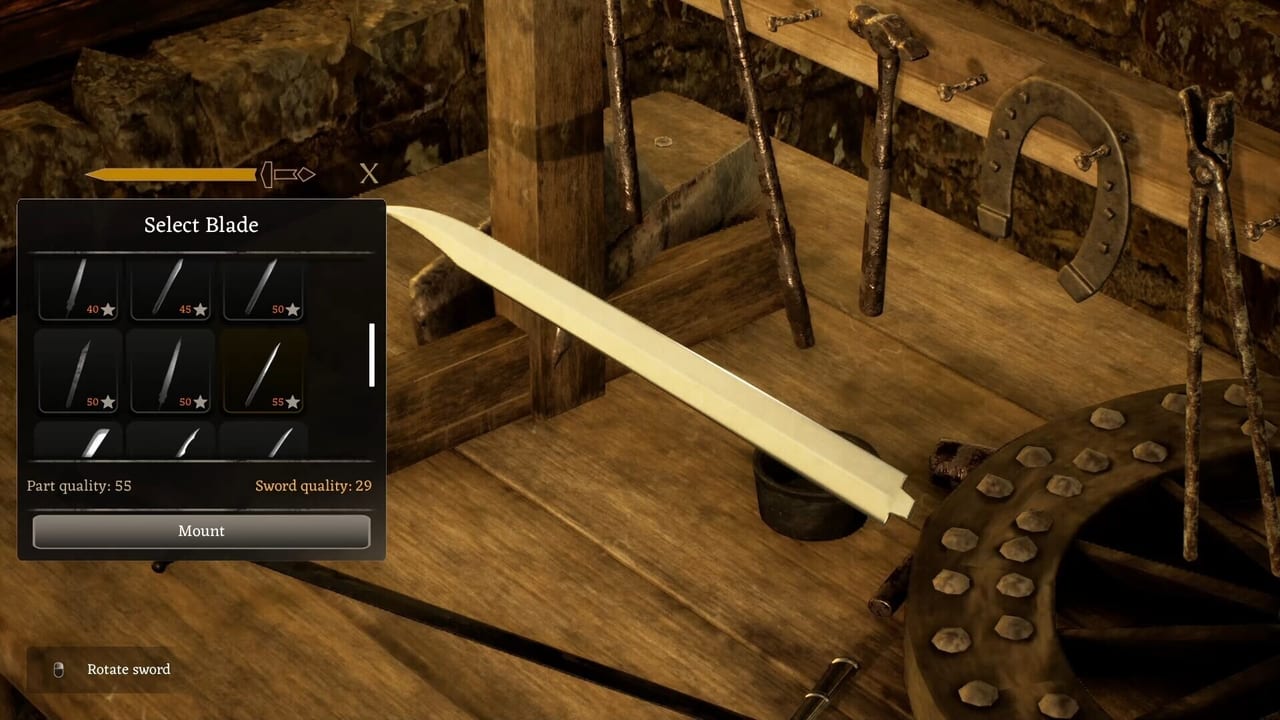
Sword parts are the vocabulary of the sword designer. Blade, guard, handle, pommel. Molds for casting sit behind the blade. This page is the noun list. The verb list is How to Forge. Together they stop you from treating every dropped hilt as a collection game.
Blades
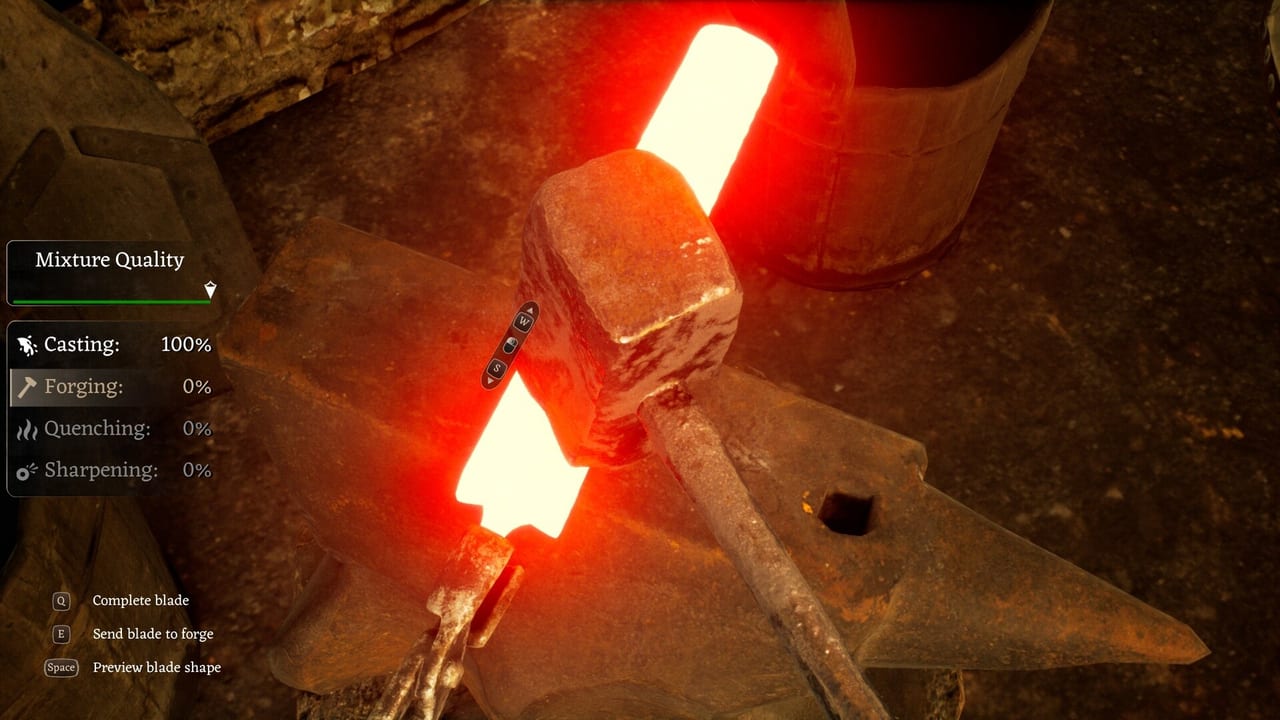
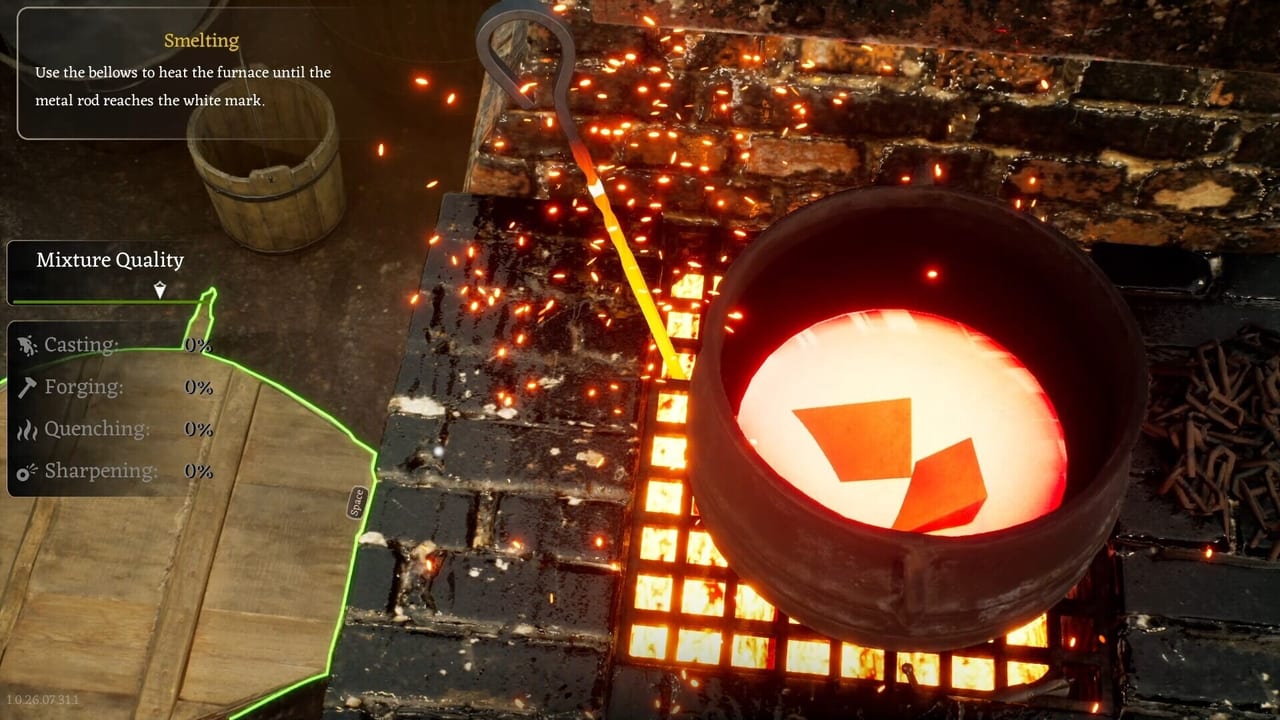
The blade carries metal choice and the work you did at furnace, anvil, grindstone, and chisel. A blade is not done because it is in the slot. It is done when the stations have been honest. Practice blades are iron. Keeper blades may take mixed metal. See materials.
Battlefield blades can be dismantled with a chisel. That is how junk swords become bars or parts. Do not dismantle the only piece that matches a quest marker.
Guards
Guards change mass and silhouette. Match the contract. A noble job can take a decorated guard. A soldier job will look overbuilt and may fight the quality math. If a guard appears on the bench but not in inventory, it is a ghost. Do not assemble around it.
Handles
Handles spend wood. If timber is short, finish metal and chop next. A wrapped handle is not a substitute for a ground edge. Do not raid the forest for cosmetics while coal is empty.
Pommels
Pommels finish balance and look. Ornate pommels are easy to overvalue because they screenshot well. They do not fix a skipped grind. Save rare pommels for keepers. Filler swords can wear leftover caps.
Molds
Forge updates added many sword molds for casting. Grey molds are gated by tutorial, region, or missing metal. They are not unlocked by a Roblox code. If the workbench vanishes mid-cast, reload. That bug is in patch notes history.
Higher-tier parts are a full-version promise on the roadmap. Your Early Access catalog is allowed to look small. Make excellent versions of the parts you have. That is the skill the later catalog will still use.
What to keep in the chest
Keep: one high-grade complete sword, spare iron blades, a couple of plain guards, handle blanks, any unique-looking part you cannot recast yet.
Melt or dismantle: bent battlefield swords, duplicate junk hilts, parts you cannot click.
Sell: only filler completes, and only after you know traders and travel will not want that grade tonight.
Parts exist to become a sword that does a job. If a part has been in the chest longer than a region stay, either slot it or smelt it. The Items Hub will still be there when a new mold lands. The anvil will not wait for your museum.
Sibling parts and why they are not this page
Materials are inputs. This page is mid-assembly. Shields are a different bench. Mixing those three ideas is how a boss plate ends up in a pommel slot in your head, even if the UI would never allow it. When a contract says “sword,” stay here. When it says “shield” or “scythe,” leave. When it says nothing useful, screenshot the NPC and compare to How to Forge. Early Access text is not a ruleset. Your save file is. Keep one complete spare sword so a vanished bench does not wipe the only gate-quality set you owned. That spare is a part strategy, not a hoarder habit.
Frequently Asked Questions
Quick answers to the most common questions.
Which part matters most?
The blade, because it carries metal and station quality. Guards, handles, and pommels support the job.
Should I collect every mold?
No. Cast what contracts and gates need. Higher-tier molds are still on the roadmap.
Can I mix any guard with any blade?
The designer lets you mix. Contracts and mass still care. Match the job.
A part is visible but unusable. Why?
Ghost inventory. Reload. Do not assemble around it.